
Why a Beautiful Room Can Still Feel Uncomfortable
Updated: Aug 18
A room can look beautiful and still feel strangely uncomfortable when its design does not support real life. Comfort comes from how a space works, not just how it photographs.
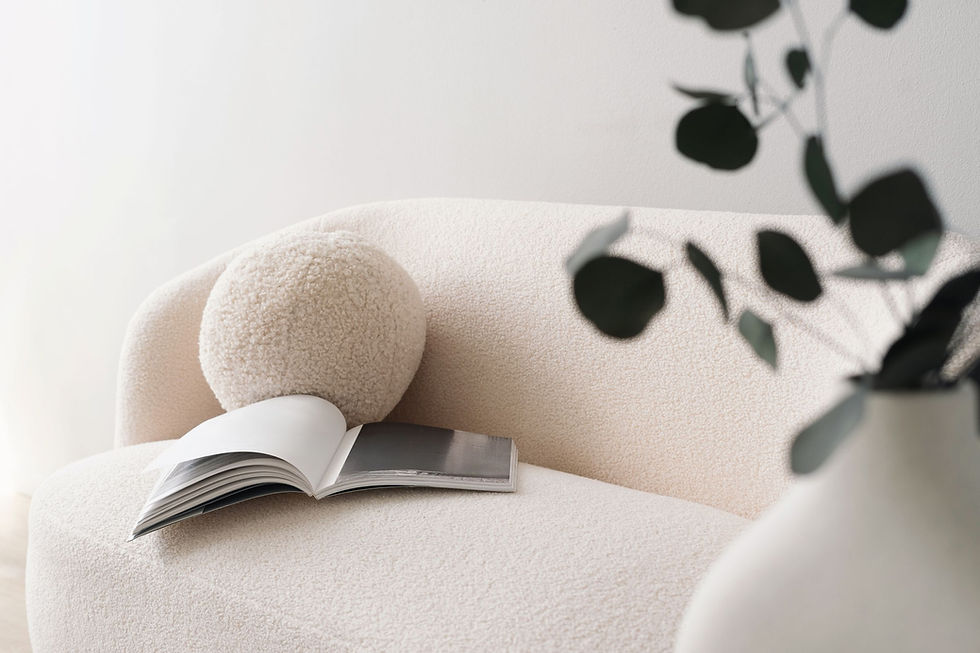
Have you ever bought a really nice piece of furniture, matched it with a beautiful lamp, rug and accessories, and still felt that something is not quite right? If you have, join the club. Everything looks beautiful, and you are rather proud of your findings, but somehow the room still feels oddly uncomfortable among the new pieces.
I notice this in spaces where people seem to adjust themselves to the interior, rather than the other way around. They perch instead of sit, hesitate before putting down a coffee cup, or move through the space as if they are slightly afraid of disturbing the arrangement. To me, that is a sign that the room may be beautiful, but it is not designed for real life. A room can photograph like a showroom and still leave daily life standing awkwardly in the corner, wondering where to sit.
This kind of discomfort often seems mysterious, yet the underlying reasons are usually very concrete. A distance may be wrong, a proportion may be off, the lighting may be too flat or too cool, the seating arrangement may not support conversation, or the room simply does not allow people to behave naturally.
Good design looks at how a room is used, how people move through it, how light and materials shape the atmosphere, and whether the space allows life to happen naturally. In a well‑designed home, comfort is the feeling that the room understands what is expected of it. The room can be elegant without being stiff. It can be refined without making everyday life feel like an intrusion. It can be calm without being empty.
At AAVA, beauty is never treated as a surface condition alone. A room should not only look composed, it should feel natural to inhabit. Our aim is to create interiors where elegance has practical intelligence behind it.
I am always interested in how people behave in a room once the first impression has passed. Do they sit down naturally? Do they stay? Do they move easily? Do they seem at ease? A home reveals very quickly whether it has been designed for real life or only for the moment before real life begins.


